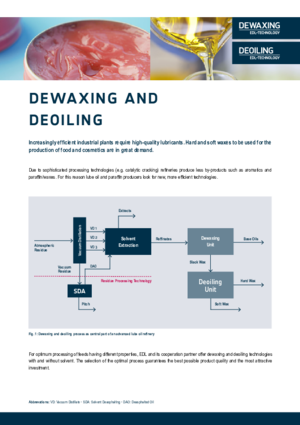
TARGETED OIL SEPERATION: EFFICIENT DEOILING PROCESS FOR HIGH-QUALITY PRODUCTS
Deoiling
The DEOILING technology is an innovative process for the deoiling of waxes.
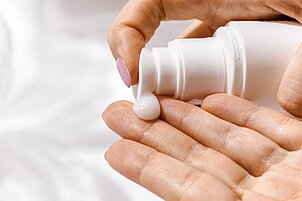
Deoiling of waxes is a process in which residual oils are removed from slack wax to obtain a pure, solid wax with the desired properties. This is particularly relevant for petrochemical applications, as well as the production of cosmetics, pharmaceuticals, food packaging, and more.

Technology Overview
The products used are microcrystalline and macrocrystalline paraffin slack wax from dewaxing with oil contents of 3 to 10 percent.
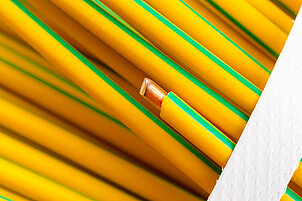
The products of the DEOILING process are microcrystalline and macrocrystalline hard waxes with an oil content of less than 0.5 percent (1 percent).
Waxes are obtained from vacuum distillate fractions or deasphalted oil (DAO) via solvent deasphalting of vacuum residue. Using the classical solvent crystallization method with MEK/toluene, a high-quality wax with an oil content below one percent can be produced from slack wax, which can also be upgraded to food-grade quality through wax hydrotreating.
Depending on the specific properties of the raw material, processes with and without solvents or a combination of both processes are offered.
By combining both processes (with and without solvents, two independent process stages), significant advantages are achieved over traditional solvent-based technologies:
- Ideal for increasing the capacity of existing plants through seamless integration
- De-oiling of light to medium-duty products using the solvent-free process
- Reduction in investment costs when combining both processes
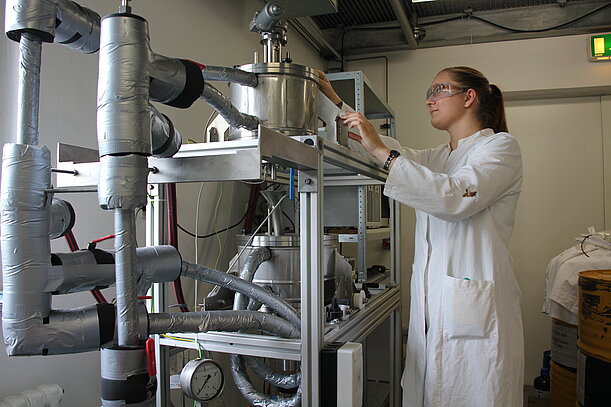
Design reliability with in-house test facility
At our dedicated test facilities in Leipzig, located at the Institute for Non-Classical Chemistry (INC) at Leipzig University, and in collaboration with our partner, we conduct investigations to determine equilibrium data, product yields and qualities, design parameters, as well as tests with various solvents such as MEK/toluene mixtures and others. In addition, we optimize the solvent-to-feedstock ratio and the solvent composition.
Based on the laboratory data, the plant is designed using proprietary process simulation software developed by EDL, incorporating its own specialized calculation models.